
This Colorful Spice Can Help Treat Anxiety and Depression
by Arukah in Anxiety / Mental Health Posted on 04/16/2020 12:00 AM
STORY AT-A-GLANCE
The spice saffron may benefit health conditions like depression, memory loss, anxiety, premenstrual syndrome, spatial learning impairment due to chronic-induced stress and liver cancer
Studies indicate that saffron's active components have anticonvulsant, anti-inflammatory and antitumor effects and serve as radical scavengers
In studies with both major depressive disorder and mild to moderate depression, saffron was as effective as antidepressants
Like antidepressants, saffron is thought to inhibit dopamine, norepinephrine and serotonin reuptake
Saffron has fewer adverse effects than antidepressants, even in the elderly and those with coronary artery disease
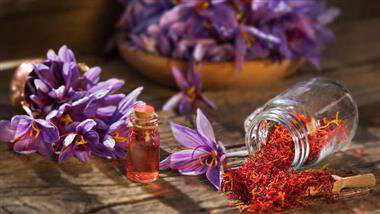
Saffron, stigmas of the purple crocus flower, is one of the most intriguing plants on Earth. It only blooms once a year and has only three stigmas when it does, making it one of the world's most expensive spices by weight. It takes about 170,000 flowers to produce a single pound of saffron.1
Saffron is primarily grown in Iran but is also cultivated in Afghanistan, Italy, Morocco, Spain, the Netherlands and the U.S. It is usually hand harvested, not mechanically harvested, adding to its significant cost.
Saffron has a centuries-old history as a much sought after herb with healing properties. Kings, queens, pharaohs and monks used saffron in their food and drinks, baths, during prayers and to scent their beds.2 In the Middle Ages, saffron was so highly prized, those who sold adulterated saffron were imprisoned and harshly punished.3
Given saffron's high price, it's good to know that in cooking, a "little goes a long way." For most recipes, a pinch of soaked, dried and crushed saffron threads will do the trick — 1 teaspoon of saffron threads equals about one-eighth teaspoon of ground saffron. In addition to its culinary uses, saffron also has a number of valuable health benefits.
Saffron Is Linked to Many Health Benefits
Scientific studies have found saffron to be effective in treating depression, memory loss,4 anxiety,5 premenstrual syndrome,6 spatial learning impairment due to chronic-induced stress7 and liver cancer.8
Its active components exert anticonvulsant, antidepressant, anti-inflammatory and antitumor effects and serve as radical scavengers, according to studies.9 Historically, saffron has been used to relieve the pain of kidney stones and stomach aches.10
A 2013 study published in the journal Pharmaceutical Biology explored saffron's anticancer properties. After reviewing the current research on saffron, the researchers wrote that:11
"Saffron possesses free radical-scavenging properties and antitumor activities. Significant cancer chemopreventive effects have been shown … Based on current data, saffron … could be considered as a promising candidate for clinical anticancer trials."
The researchers hypothesize that the anticancer properties may come from:12
"… the inhibitory effect of saffron on cellular DNA and RNA synthesis, the inhibitory effect on free radical chain reactions, and that the saffron extract exerted the metabolic conversion of naturally occurring carotenoids into retinoids …
Another report showed that saffron contains lectins, which suggested that the antitumor activity of saffron is mediated by lectins … Recently, Amin et al. (2011) showed that saffron exerted a significant chemopreventive effect against liver cancer through inhibition of cell proliferation and induction of apoptosis."
In addition to disease fighting properties, saffron contains important nutrients like iron, which is good for blood and muscles; magnesium, which is good for nerves, muscles, bones and heart rate; and manganese, which helps regulate blood sugar, metabolize carbohydrates and absorb calcium.
Saffron also contains potassium, which is good for adrenal and kidney function; vitamin B6, which is good for the brain, nervous system and hormones; and vitamin C, which assists the immune system.
Research Shows Saffron Relieves Depression and Anxiety
Depressioncan be a serious condition marked by a persistent sad mood, feelings of worthlessness, difficulty thinking, concentrating and experiencing pleasure and even thoughts of suicide and death.13
Patients with chronic disease, when they also have major depressive disorder (MDD), are at higher risk of heart disease, hormonal disorders, Parkinson's disease, diabetesand Alzheimer's disease.14 But the too-widely prescribed antidepressants are no answer to depression and there are serious reasons people avoid them.
Many cannot tolerate the side effects of these drugs, such as weight gain, sexual dysfunction, flattened mood and suicidal ideation.15 Others do not want to take drugs that are difficult to discontinue.16 Moreover, the drugs are barely effective in mild or moderate depression.17
The good news is that studies are finding saffron is a promising treatment for depression and the anxiety that often accompanies it. According to a meta-analysis in Nutrition Reviews, which looked at 23 saffron studies:18
"Saffron had a large positive effect size when compared with placebo for depressive symptoms and anxiety symptoms … Saffron could be an effective intervention for symptoms of depression and anxiety."
Saffron May Be Useful in Major Depressive Disorder
An estimated 7.1% of the adult U.S. population experienced at least one major depressive episode in 2017 and the majority wereprescribed antidepressant drugs. Sadly, many patients stay on these drugs long-term, which may compromise their health. Clearly the chance of substituting saffron in treatment of MDD is an encouraging prospect. Research published in the Journal of Integrative Medicine found that:19
"… saffron may be helpful for treating depressive symptoms among individuals with MDD. In the two studies that examined the effects of saffron supplementation versus placebo control groups, a large effect size was found in favor of saffron supplementation.
For the three studies that examined the effects of saffron supplementation compared to antidepressant groups (i.e., fluoxetine [Prozac] or imipramine), significant improvements in depressive symptoms were observed among participants in both conditions … Taken together, the findings of the trials included in this meta-analysis indicate that saffron is an efficacious strategy for treating MDD in the short-term."
The researchers admitted that MDD is a difficult and refractory diagnosis:20
"Remission of MDD is difficult to achieve with less than 50% of patients responding to standard treatments (e.g., antidepressants). For patients who are not responding adequately to an anti-depressant, the two main current treatment approaches are switching drugs or trying alternative approaches such as herbal medicine."
As might be expected, subjects in the study who were given saffron exhibited fewer adverse effects than those given the antidepressant imipramine. Subjects given saffron did experience adverse effects likeheadaches and nausea, but the effects did not differ from subjects given placebo.21
Another study in the Journal of Affective Disorders also noted fewer unwanted side effects with saffron, while still reaping positive effects similar to those of antidepressants. According to the authors:22
"A number of clinical trials demonstrated that saffron and its active constituents possess antidepressant properties similar to those of current antidepressant medications such as fluoxetine, imipramine and citalopram [Celexa], but with fewer reported side effects."
The Actions of Saffron Mimic Those of Antidepressants
Though side effects from saffron appear less serious than side effects from prescription antidepressants, the mechanisms of action may be similar, according to research published in the Journal of Pharmacy & Bioallied Sciences:23
"Similar to antidepressants, saffron may exert its antidepressant effect by modulating the levels of certain chemicals in the brain, including serotonin … saffron extract might inhibit serotonin reuptake in synapses. Inhibiting synaptic serotonin reuptake keeps serotonin in the brain longer, thereby enhancing its positive effects while combating depression …
It is suggested that the inhabitation of dopamine, norepinephrine, and serotonin reuptake by crocin and safranal [components of saffron] might be the possible mechanism of antidepressive effect of saffron …
Scientifically proven traditional uses of saffron as antidepressant suggested that crocin exerts its antidepressant effect by increasing cAMP response element binding protein, brain-derived neurotrophic factor and nerve growth factor inducible levels in rat hippocampus."
Saffron may also be useful against oxidative stress, according to a paper in the Journal of Pharmacy & Bioallied Sciences, which notes that:24
"These medicinal properties of saffron may be attributed to a number of its compounds such as crocetin, crocins, and safranal, which have strong antioxidant and radical scavenger properties to protect against a variety of reactive radical oxygen species and pro-inflammatory cytokines."
Saffron May Be Useful in Mild to Moderate Depression
Antidepressants are widely seen as ineffective in mild to moderate depression.25 However, studies show that saffron may well treat such conditions. According to a meta-analysis published in the journal Planta Medica, which looked at 11 randomized saffron trials and pooled data from nine studies:26
"… saffron has a significant effect on the severity of [mild to moderate] depression. Available data from randomized, controlled clinical trials support that saffron is significantly more effective than placebo and non- inferior to tested antidepressant drugs."
A meta-analysis in the journal Human Psychopharmacology also found initial support for the use of saffron for the treatment of mild to moderate depression.27 Like other scientists who have studied saffron, the authors believe its actions are likely due to its "serotonergic, antioxidant, anti-inflammatory, neuro-endocrine and neuroprotective effects."28
In the six placebo-comparison studies they reviewed, they found "saffron had large treatment effects," and that "when compared with antidepressant medications, had similar antidepressant efficacy."29
Saffron May Treat Depression in Special Populations
When depression occurs in certain special patient populations, such as those who are older or who have a history of percutaneous coronary intervention, it can have more serious consequences. Saffron may be a particularly good option for these patients. As noted in a study of older patients published in Psychiatry Research:30
"A total of 50 older out-patients with MDD were randomly assigned either to the saffron condition or to the sertraline [Zoloft] condition for six consecutive weeks … Symptoms of depression decreased over time, with no advantages or disadvantages for the saffron or sertraline condition …
The pattern of results suggests that both saffron and sertraline have the potential to significantly decrease symptoms of depression. The results are clinically relevant, because major depressive disorders in older people is a health concern.
The results are further relevant, because saffron appears to be a powerful antidepressant for older people, who might be more reluctant to the use of synthetic drugs."
In research published in Journal of Affective Disorders, patients who had received percutaneous coronary intervention were also able to get depression relief using saffron:31
"A significant correlation exists between coronary artery diseases and depression. The aim of this trial was to compare the efficacy and safety of saffron versus fluoxetine [Prozac] in improving depressive symptoms of patients who were suffering from depression after performing percutaneous coronary intervention …
By the study endpoint, no significant difference was detected between two groups … Remission and response rates were not significantly different as well. There was no significant difference between two groups in the frequency of adverse events during this trial …
Short-term therapy with saffron capsules showed the same antidepressant efficacy compared with fluoxetine in patients with a prior history of PCI who were suffering from depression."
Clearly the intriguing plant, saffron, has a lot more to offer than spicing up culinary dishes. The possibility of using saffron for the treatment of depression is great news, considering the many dangers of psychiatric drugs currently on the market.
Sources and References
1 National Geographic May 3, 2017
2 Sativus
4, 7, 9, 10, 23, 24 Journal of Pharmacy & Bioallied Sciences 2018 Oct-Dec; 10(4): 173–180.
5, 18 Nutrition Reviews, Volume 77, Issue 8, August 2019, Pages 557–571
6, 13, 14, 17, 19, 20, 21, 25 Journal of Integrative Medicine 2013 Nov; 11(6): 377–383.
8, 11, 12 Pharmaceutical Biology 2013 Jul; 51(7): 920–924.
15, 16 Mayo Clinic 2020
22 Journal of Affective Disorders 2018 Feb;227:330-33
26 Planta Medica 2019 Jan;85(1):24-31
27, 28, 29 Human Psychopharmacology 2014; 29(6): 517-527

BECOME A HEALER
Learn the art and science of Naturopathic Herbalism to become the healer of your home and your community, and build a profitable online health coaching business.
PODCAST INTERVIEWS
06/16/2022
04/13/2022
Unlock Your Potential as a Holistic Healer
02/01/2022
01/12/2022
11/21/2021
Mayim Vega, Naturopathic Herbalist and Holistic Life Coach, started Arukah.com, the Holistic Life Academy in 2009 to help people attain holistic health and healing through The Arukah Method. In 2021, Arukah.com began offering the Holistic Healer certification program to train people in nutrition, herbalism, naturopathy, and health & life coaching. Her goal is to create an army of much-needed holistic healers that will pave the way to the future of healthcare. As the inventor & visionary Thomas Edison once said, “The doctor of the future will give no medicine but will interest his patients in the care of the human frame, in diet and in the cause and prevention of disease.”
She was formerly a Computer Scientist/Engineer at the NASA Ames Research Center before starting her own family. She saw that the modern medical system was broken and took her family's health into her own hands by studying the top healers of our day. She believes the words of Hippocrates, the “Father of Medicine,” when he said, “The greatest medicine of all is teaching people how not to need it...Everyone has a doctor in him or her; we just have to help it in its work.”
Dr. Gilsa Zorrilla, M.D.

"There are so many positive things I could say about Mayim Vega. She possesses extensive knowledge of health issues. My family and I never hesitate to contact her immediately whenever we have any questions. I’d recommend her
100% any day!"
Rivkah Jaton Maddox
"Mayim has helped me tremendously over the last 3 years in my journey toward healing. There have been
multiple times that I have inquired and received
invaluable wisdom and knowledge from her."
Dr. Ark Pizarro, M.D.
"She has helped us on multiple occasions with life lessons,
health counseling and business insights that you know are coming from a person of great knowledge and wisdom. If you have the pleasure of getting to know her I'm sure you will
agree."
Reviews & Testimonials from Our Students
I've had the pleasure of knowing and working with Mayim Coralyn Vega of Arukah.com over the past 5 years. In that time it has been an honor to know a person of such high integrity, self sacrifice and genuine interest in helping her fellow man.
Whether it's through her counsel, teaching or friendship she seeks to make the world a better place for all of us and is always offering her generosity and care to everyone.
She has helped us on multiple occasions with life lessons, health counseling and business insights that you know are coming from a person of great knowledge and wisdom. If you have the pleasure of getting to know her I'm sure you will agree.
Sincerely,
Dr. Ark Pizarro, M.D.
There are so many positive things I could say about Mayim Vega, but today I'm going to focus on two that are very important to me. First is her willingness to always serve others, and second is her ability and openness to answering questions. She possesses extensive knowledge of health issues. My family and I never hesitate to contact her immediately whenever we have any questions about alternativesto conventional treatments that I already know of from my training in the management of diseases. I’d recommend her 100% any day!
- Dr. Gilsa Zorrilla, M.D.
Mayim has helped me tremendously over the last 3 years in my journey toward healing. There have been multiple times that I have inquired and received invaluable wisdom and knowledge from her. For example, I struggle with arthritis and have heart palpitations regularly. Mayim provided me with her formula for herbal calcium tea. After drinking it I felt a difference very quickly. Over time, my palpitations dissipated and my pain was relieved. I also had very healthy blood pressure after drinking the tea as she recommended for a few months. This greatly increased my quality of life. Additionally, I required more iron, as I as anemic and struggling, and she shared her super greens formula with me which also helped bring up my B vitamins. I saw a major improvement after drinking daily, and I began providing the drink to my children as well.
I was interested in naturopathic healing before acquiring Mayim's recommendations, but I have learned so much as a result. Herbal remedies, a whole foods diet, and many options for avoiding allopathic care have all added to my family's quality of life. More than that, though she has helped me navigate many trials and has been an integral part of my personal healing in that she has given me advice on how to process trauma, how to promote healing emotionally/physically, and how best to handle situations in my life. When I've needed honest advice, she has consistently listened and given fair advice in many areas of my life.
Lastly, Mayim is a successful entrepreneur from whom I have gotten many ideas from, while running a family business and has shared her knowledge and even challenges so that we as a family might be more successful. In all, she is an invaluable asset and cherished ally to our family and to me individually.
- Rivkah Jaton Maddox & Family
Dear Prospective Student / Client of Arukah or Mayim Coralyn Vega
I have been a longtime clientof Mayim and her holistic company, Arukah.
Mayim is someone who believes in the intelligence of the body, as well as its capacity for self-healing. She is also skilled in a wide variety of herbal remedies, many of which she has shared with me.
It is through Mayim that I was introduced to naturopathic perspectives and practices, such as those taught by the late Dr. John Christopher and his School of Natural Healing. Much of what I learned while studying these teachings inspiredand empoweredme to take even greater control of my health and wellness journey. For this alone, I will forever be grateful.
Mayim and the entire team at Arukah have always been extremely professional and helpful. She and Arukah are generous with their time and advice and I know that they really care about me. The guidance and remedies I've received over the past five years have equipped me to support my body through any challenge.
Because of Mayim, I have a deeper understanding of and appreciation for my body's natural healing processes. I have learned to not live in fear. I have learned to trust my intuition of what my body wants and needs. And I live in greater freedom and awareness of my body's innate wisdom.
Sincerely,
Whitley Bonner
Founder of Cob and Bale (Natural Buildling & EMF Shielding)

Naturopathic Herbalism

Holistic
Life Coaching

Online
Entrepreneurship

DISCLAIMER: The information you receive from Arukah.com and it's representatives, on social media, via email, through Zoom, a phone call or text message, or in person, is for educational purposes only. The information is NOT intended to serve as a substitute for diagnosis, treatment, or advice from a qualified, licensed medical professional preferably someone also knowledgeable in naturopathy, homeopathy, orthomolecular nutrition, integrative or functional medicine. The facts presented are offered as information only in order to empower you - our information and programs are not medical advice - and in no way should anyone infer that we or anyone appearing in any of our content found anywhere are practicing medicine. Any diet, health, or lifestyle program you undertake should be discussed with your physician or other licensed medical professional. Seek the advice of a medical professional for proper application of ANY material to your specific situation. NEVER stop or change your medications without consulting your physician. If you are having an emergency contact your emergency services: in the USA that’s 911.

DISCLAIMER: The information you receive from Arukah.com or Vega10 and it's representatives, on social media, via email, through Zoom, a phone call or text message, or in person, is for educational purposes only. The information is NOT intended to serve as a substitute for diagnosis, treatment, or advice from a qualified, licensed medical professiona. The facts presented are offered as information only in order to empower you with knowledge - our information and programs are not medical advice - and in no way should anyone infer that we or anyone appearing in any of our content found anywhere are practicing medicine. Any diet, health, or lifestyle program you undertake should be discussed with your physician. Seek the advice of a medical professional for proper application of ANY material to your specific situation. We must advise that you should never stop or change your medications without consulting your physician. If you are having an emergency contact your emergency services: in the USA that’s 911.