
Important Factors Typically Ignored in Depression Screening Tests
by Dr. Mercola in Gut Health Posted on 10/23/2014 12:00 AM
STORY AT-A-GLANCE
11 percent of Americans over the age of 12 are on antidepressant drugs. In 2010, antidepressants were the second most commonly prescribed type of medication in the US
Short-term trials show that antidepressants do NOT provide any clinically significant benefits for mild to moderate depression, compared to a placebo
Long-term studies also indicate that of people with major depression, only about 15 percent that are treated with an antidepressant go into remission and stay well for a long period of time
The remaining 85 percent of those treated with antidepressants start having continuing relapses and become chronically depressed
There are many options besides antidepressants for addressing depression. Three of the most effective strategies include optimizing your vitamin D level and gut health, and getting regular exercise
By Dr. Mercola
According to the US National Institute of Mental Health, 11 percent of Americans over the age of 12 are on antidepressant drugs and among some groups like women in their 40 and 50s it is one in four.1
In 2010, antidepressants were the second most commonly prescribed type of medication in the US.2 October 9 was National Depression Screening Day in the US,3 coinciding with World Mental Health Day.
The campaign, founded in 1991 by Douglas Jacobs, an associate clinical professor of psychiatry at Harvard Medical School, urges Americans to get screened for depression, offered free of charge at doctor’s offices, colleges, community institutions, and hospitals across the nation.
Unfortunately, the importance of things like vitamin Dand gut health for the maintenance of mental and emotional stability is still frequently ignored. Exercise is another widely overlooked remedy that would do far more good than any drug ever will.
And that’s the problem I have with campaigns like National Depression Screening Day. Rarely if ever do these mental health tests include questions about sun exposure, diet, or exercise habits...
The Problem with Mental Health Screening Tests
Mental health screening tests could serve to improve the mental health of millions, if vitamin D screening, diet, and other lifestyle factors were addressed. But all in all, mental health screenings typically do little besides promote the use ofantidepressants.
For example, the free onlinedepression screening testoffered by WebMD back in 2010 turned out to be sponsored by drug giant Eli Lilly, the maker of Cymbalta, and was rigged in such a way that no matter how you responded, the answer was always the same: “You may be at risk for major depression, and it would probably do you well to discuss it with your doctor…”
The test was absolutely useless, and was purposely designed to lure in new patients for a drug pitch. When looking at the research literature, short-term trials show that antidepressants actually do NOT provide any clinically significant benefits for mild to moderate depression, compared to a placebo.
Long-term studies also indicate that of people with major depression, only about 15 percent that are treated with an antidepressant go into remission and stay well for a long period of time. The remaining 85 percent start having continuing relapses and becomechronically depressed!
All drugs have benefit-to-risk ratios, so if a drug is as effective as a placebo in relieving symptoms, and comes with an array of hazardous side effects, it really doesn’t make sense to use them as a first line of defense—especially if they raise your risk of mental illness over the long term! Based on the scientific evidence there are many better options.
Vitamin D Deficiency Can Play a Role in Depression
Most countries in which depressionrates are high tend to be in northern latitudes where vitamin D deficiency is prevalent, and numerous studies have shown that vitamin D deficiency can predispose you to depression, and that depression can respond favorably to optimizing your vitamin D stores.
For example, one previous study found that seniors with the lowest levels of vitamin D were11 times more prone to be depressed than those who had normal levels. More recent research was discussed in a Times Online article:4
“A study in the United States indicated that vitamin D deficiency occurred more often in certain people, including African-Americans, city dwellers, the obese, and those suffering from depression.
People with vitamin D levels below 20 ng/mL had an 85 percent increased risk of depression compared to those with vitamin D levels greater than 30 ng/mL” [Emphasis mine]
Vitamin D deficiency has long been associated with Seasonal Affective Disorder5 (SAD), and according to a double-blind randomized trial6 published in 2008: “It appears to be a relation between serum levels of 25(OH)D and symptoms of depression.
Supplementation with high doses of vitamin D seems to ameliorate these symptoms indicating a possible causal relationship.” Recent research also claims that low vitamin D levels appear to be associated with suicide attempts. As reported by Michigan State University:7
“The study, published in the September issue of the journal Psychoneuroendocrinology found that around 60 percent of the suicidal patients were deficient in vitamin D according to clinical standards.
The suicidal patients’ levels of Vitamin D were significantly lower than those in the healthy controls... The patients who were deficient in vitamin D also had higher inflammatory markers in their blood, the study found, suggesting that low levels of vitamin D could be a cause of the inflammation.
Previous studies have shown that increased inflammation in the body might be a contributing factor to depression and suicidal tendencies. Vitamin D deficiency also previously has been linked to mental illness, including depression.” [Emphasis mine]
To suggest that depression is rooted in nutrient deficiencies and other lifestyle related factors does not detract from the fact that it’s a serious problem that needs to be addressed with compassion and non-judgment. It simply shifts the conversation about what the most appropriate answers and remedies are.
During this year’s Mental Health Awareness Week, KCWY13,8 a local news channel in Wyoming, wisely noted that:
“Vitamin D is important because it helps fight off depression... Dee Ann Lippincott, of the Central Wyoming Counseling Center said, ‘The higher altitude you go and the higher you go in the country the higher the rates of depression.’
While sunlight is the best way to get vitamin D and ward off depression, it isn't the only way. For example there's a strong connection between a healthy lifestyle and a healthy mind.
Lippincott said, ‘People who eat a healthier diet are less prone to depression then people who eat the more western diet which is more based on junk food and fast food, and not a lot of fruits and vegetables.’"
The Links Between Gut and Mental Health
Your mental health is also linked to your gut health. As with vitamin D, a number of studies have confirmed that gastrointestinal inflammation can play a critical role in the development of depression. For example, a Hungarian scientific review9 published in 2011 made the following observations:
Depression is often found alongside gastrointestinal inflammations and autoimmune diseases as well as with cardiovascular diseases, neurodegenerative diseases, type 2 diabetes and also cancer, in which chronic low-grade inflammation is a significant contributing factor. Thus researchers suggested “depression may be a neuropsychiatric manifestation of a chronic inflammatory syndrome.”
Research suggests the primary cause of inflammation may be dysfunction of the “gut-brain axis.” Your gut is literally your second brain -- created from the identical tissue as your brain during gestation -- and contains larger levels of the neurotransmitter serotonin, which is associated with mood control.
It's important to understand that your gut bacteria are an active and integrated part of serotonin regulation and actually produce more serotonin than your brain. Optimizing your gut flora is a key part of the equation to optimize your levels.
An increasing number of clinical studies have shown that treating gastrointestinal inflammation with vitamin B, vitamin D, and omega-3 fatsmay also improve depression symptoms and quality of life by attenuating pro-inflammatory stimuli to your brain.
Sugar Is Also a Major Factor in Depression
Nearly 40 years ago, William Dufty penned a great book on this subject, called Sugar Blues. It delves into the sugar-depression link in great detail, and is as applicable today as it was then. The central argument Duffy makes in the book is that sugar is extremely health-harming and addictive, and that simply making one dietary change -- eliminating as much sugar as possible -- can have a profoundly beneficial impact on your mental health.
This really makes sense when you consider that sugar not only triggers a cascade of chemical reactions in your body that promote chronic inflammation, it also distorts the ratio of good to bad bacteria in your gut. Both of these factors—chronic inflammation and imbalanced microflora—play integral roles in the quality of your second brain and your mental health.
Sugar feeds pathogenic bacteria, yeast, and fungi that inhibit the beneficial and health promoting bacteria in your gut. Sugar can also lead to excessive insulin release that can lead to hypoglycemia, which, in turn, causes your brain to secrete glutamate in levels that can cause agitation, depression, anger, anxiety, panic attacks, and an increase in suicide risk. Cultured and fermented foods, on the other hand, help reseed your gut with a wide variety of healthy bacteria that promote mental and physical health as long as your keep your sugar and processed food intake low.
For instance, one 2011 study10 found that Lactobacillus rhamnosus has a marked effect on GABA levels in certain brain regions and lowers the stress-induced hormone corticosterone, resulting inreduced anxiety- and depression-related behavior. So the two-prong dietary answer for treating depression is to a) severely limit sugars, especially fructose, as well as grains, and b) introduce fermented foods into your diet to rebalance your gut flora. As a standard recommendation, I suggest limiting your daily fructose consumption from all sources to 25 grams per day or less.
Exercise Proven More Helpful Than Antidepressants
Regular exercise is another "secret weapon" to overcoming depression. It primarily works by helping to normalize your insulin levels while simultaneously boosting “feel good" hormones in your brain. According toDr. James S. Gordon, MD, a world-renowned expert in using mind-body medicine to heal depression:
"What we're finding in the research on physical exercise is that exercise is at least as good as antidepressants for helping people who are depressed… physical exercise changes the level of serotonin in your brain. And it increases your endorphin levels, your ‘feel good hormones.’"
Medical journalist and Pulitzer Prize nomineeRobert Whitaker also discusses the drawbacks and benefits of various treatments in the video above and in his two books:Mad in America, and Anatomy of an Epidemic: Magic Bullets, Psychiatric Drugs, and the Astonishing Rise of Mental Illness in America, noting the superior benefits of exercise compared to drugs. Recent animal research also suggests that exercise can benefit your mental health by allowing your body to eliminate kynurenine, a harmful protein associated with depression. According to Reuters:11
“’If you consistently exercise and your muscle is conditioned and adapted to physical exercise, then you acquire the ability to express this class of enzymes that have the ability to detoxify something that accumulates during stress and that will be harmful for you,’ senior study author Dr. Jorge Ruas of the Karolinska Institutet in Stockholm said...
The body metabolizes this substance, kynurenine, from tryptophan, a process that is activated by stress and by inflammatory factors... Studies have linked high levels of kynurenine - which readily crosses the blood-brain barrier – to depression, suicide and schizophrenia... Clinicians can use the findings to help their patients understand why physical activity can fight off depression, Dr. Ruas said, which may improve their compliance with exercise recommendations.”
How to Optimize Your Vitamin D Level
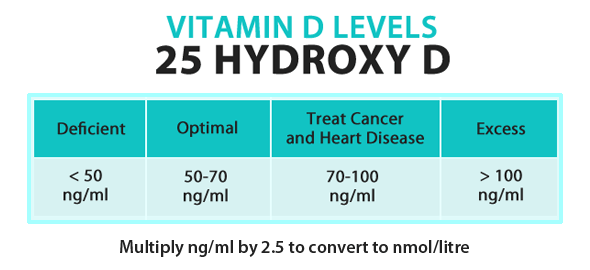
Based on the evaluation of healthy populations that get plenty of natural sun exposure, the optimal range for general physical and mental health appears to be somewhere between 50 and 70 ng/ml. As for HOW to optimize your vitamin D levels, I firmly believe that sensible sun exposure is the best way. If you can’t get enough sunshine in late fall, winter, or early spring, then a tanning bed would be your next best option. Keep in mind that most tanning equipment use magnetic ballasts, which create harmful EMF fields. If you hear a loud buzzing noise while in a tanning bed, it has a magnetic ballast system. I strongly recommend you avoid these types of beds and restrict your use of tanning beds to those that use electronic ballasts.
If your circumstances don’t allow you to access the sun or a safe tanning bed, then you really only have one option left, and that is to take a vitamin D supplement.GrassrootsHealth has a helpful chart showing the average adult dose required to reach healthy vitamin D levels based upon your measured starting point. Many experts agree that 35 IUs of vitamin D per pound of body weight could be used as an estimate for your ideal dose.
Keep in mind that if you opt for a vitamin D supplement, you also need to take vitamin K2. The biological role of vitamin K2 is to help move calcium into the proper areas in your body, such as your bones and teeth. It also helps remove calcium from areas where it shouldn’t be, such as in your arteries and soft tissues. Vitamin K2 deficiency is actually what produces the consequences similar to vitamin D toxicity, which includes inappropriate calcification that can lead to hardening of your arteries.
Test Your Vitamin D Levels at Least Once a Year—Even if You’re Healthy
I recommend testing your vitamin D level at least once a year, in the middle of the winter when your level would be at its lowest. This will give you an idea of the extent of your insufficiency. Ideally, you’d want to get your level tested several times a year, at regular intervals, to ensure you’re continuously staying within the ideal range. Once you know your pattern and can comfortably predict that you will not fall below 60 ng/ml, then it would be fine to shift to annual testing.
It’s important to remember that optimal vitamin D levels appear to offer powerful PREVENTION of a whole host of chronic diseases, not just depression, so please, do not wait for a problem to appear before addressing your vitamin D status. TheD*Action Projectby GrassrootsHealth is one cost effective solution.
To participate, simply purchase the D*Action Measurement Kit and follow the registration instructions included. (Please note that 100 percent of the proceeds from the kits go to fund the research project. I do not charge a single dime as a distributor of the test kits.)
As a participant, you agree to test your vitamin D levels twice a year during a five-year study, and share your health status to demonstrate the public health impact of this nutrient. There is a $65 fee every six months for your sponsorship of this research project, which includes a test kit to be used at home, and electronic reports on your ongoing progress. You will get a follow up email every six months reminding you "it's time for your next test and health survey."
Rethinking Your First Line of Defense Against Depression
There are many options besides antidepressants for addressing depression. Three of the most effective strategies have been addressed above, which include:
Optimizing your vitamin D level, ideally through appropriate sun exposure
Optimizing your gut health by limiting or eliminating sugar, fructose, grains, and processed foods from your diet, and introducing fermented foods
Getting regular exercise
Other helpful strategies include the use ofenergy psychology, getting adequate omega-3 fats, and getting enough sleep. Engaging in outdoor activities such as gardeningcan also do wonders. As a general rule, it would be wise to remember that your lifestyle can quite literally make or break your health and general sense of wellbeing and may be one of the most fundamental contributors to depression. The most appropriate answer then is to get to the root of the problem, and not ignore it by popping pills...
You’d be well advised to address the factors discussed in this article before resorting to drug treatment—which science has shown is no more effective than placebo, while being fraught with potentially dangerous side effects. For even more inspiration, please see my previous article “13 Mind-Body Techniques That Can Help Ease Depression.”
That said, if you are feeling desperate or have any thoughts of suicide, call the National Suicide Prevention Lifeline, a toll-free number 1-800-273-TALK (8255), or call 911, or simply go to your nearest Hospital Emergency Department.
Sources and References
1 New York Times August 12, 2013
5 The Journal of Nutrition, Health & Aging 1999, 3(1):5-7
6 Journal of Internal Medicine 264(6); 599-609
7 Michigan State University October 7, 2014
9 Orvosi Hetilap 2011 Sep 11;152(37):1477-85

BECOME A HEALER
Learn the art and science of Naturopathic Herbalism to become the healer of your home and your community, and build a profitable online health coaching business.
PODCAST INTERVIEWS
06/16/2022
04/13/2022
Unlock Your Potential as a Holistic Healer
02/01/2022
01/12/2022
11/21/2021
Mayim Vega, Naturopathic Herbalist and Holistic Life Coach, started Arukah.com, the Holistic Life Academy in 2009 to help people attain holistic health and healing through The Arukah Method. In 2021, Arukah.com began offering the Holistic Healer certification program to train people in nutrition, herbalism, naturopathy, and health & life coaching. Her goal is to create an army of much-needed holistic healers that will pave the way to the future of healthcare. As the inventor & visionary Thomas Edison once said, “The doctor of the future will give no medicine but will interest his patients in the care of the human frame, in diet and in the cause and prevention of disease.”
She was formerly a Computer Scientist/Engineer at the NASA Ames Research Center before starting her own family. She saw that the modern medical system was broken and took her family's health into her own hands by studying the top healers of our day. She believes the words of Hippocrates, the “Father of Medicine,” when he said, “The greatest medicine of all is teaching people how not to need it...Everyone has a doctor in him or her; we just have to help it in its work.”
Dr. Gilsa Zorrilla, M.D.

"There are so many positive things I could say about Mayim Vega. She possesses extensive knowledge of health issues. My family and I never hesitate to contact her immediately whenever we have any questions. I’d recommend her
100% any day!"
Rivkah Jaton Maddox
"Mayim has helped me tremendously over the last 3 years in my journey toward healing. There have been
multiple times that I have inquired and received
invaluable wisdom and knowledge from her."
Dr. Ark Pizarro, M.D.
"She has helped us on multiple occasions with life lessons,
health counseling and business insights that you know are coming from a person of great knowledge and wisdom. If you have the pleasure of getting to know her I'm sure you will
agree."
Reviews & Testimonials from Our Students
I've had the pleasure of knowing and working with Mayim Coralyn Vega of Arukah.com over the past 5 years. In that time it has been an honor to know a person of such high integrity, self sacrifice and genuine interest in helping her fellow man.
Whether it's through her counsel, teaching or friendship she seeks to make the world a better place for all of us and is always offering her generosity and care to everyone.
She has helped us on multiple occasions with life lessons, health counseling and business insights that you know are coming from a person of great knowledge and wisdom. If you have the pleasure of getting to know her I'm sure you will agree.
Sincerely,
Dr. Ark Pizarro, M.D.
There are so many positive things I could say about Mayim Vega, but today I'm going to focus on two that are very important to me. First is her willingness to always serve others, and second is her ability and openness to answering questions. She possesses extensive knowledge of health issues. My family and I never hesitate to contact her immediately whenever we have any questions about alternativesto conventional treatments that I already know of from my training in the management of diseases. I’d recommend her 100% any day!
- Dr. Gilsa Zorrilla, M.D.
Mayim has helped me tremendously over the last 3 years in my journey toward healing. There have been multiple times that I have inquired and received invaluable wisdom and knowledge from her. For example, I struggle with arthritis and have heart palpitations regularly. Mayim provided me with her formula for herbal calcium tea. After drinking it I felt a difference very quickly. Over time, my palpitations dissipated and my pain was relieved. I also had very healthy blood pressure after drinking the tea as she recommended for a few months. This greatly increased my quality of life. Additionally, I required more iron, as I as anemic and struggling, and she shared her super greens formula with me which also helped bring up my B vitamins. I saw a major improvement after drinking daily, and I began providing the drink to my children as well.
I was interested in naturopathic healing before acquiring Mayim's recommendations, but I have learned so much as a result. Herbal remedies, a whole foods diet, and many options for avoiding allopathic care have all added to my family's quality of life. More than that, though she has helped me navigate many trials and has been an integral part of my personal healing in that she has given me advice on how to process trauma, how to promote healing emotionally/physically, and how best to handle situations in my life. When I've needed honest advice, she has consistently listened and given fair advice in many areas of my life.
Lastly, Mayim is a successful entrepreneur from whom I have gotten many ideas from, while running a family business and has shared her knowledge and even challenges so that we as a family might be more successful. In all, she is an invaluable asset and cherished ally to our family and to me individually.
- Rivkah Jaton Maddox & Family
Dear Prospective Student / Client of Arukah or Mayim Coralyn Vega
I have been a longtime clientof Mayim and her holistic company, Arukah.
Mayim is someone who believes in the intelligence of the body, as well as its capacity for self-healing. She is also skilled in a wide variety of herbal remedies, many of which she has shared with me.
It is through Mayim that I was introduced to naturopathic perspectives and practices, such as those taught by the late Dr. John Christopher and his School of Natural Healing. Much of what I learned while studying these teachings inspiredand empoweredme to take even greater control of my health and wellness journey. For this alone, I will forever be grateful.
Mayim and the entire team at Arukah have always been extremely professional and helpful. She and Arukah are generous with their time and advice and I know that they really care about me. The guidance and remedies I've received over the past five years have equipped me to support my body through any challenge.
Because of Mayim, I have a deeper understanding of and appreciation for my body's natural healing processes. I have learned to not live in fear. I have learned to trust my intuition of what my body wants and needs. And I live in greater freedom and awareness of my body's innate wisdom.
Sincerely,
Whitley Bonner
Founder of Cob and Bale (Natural Buildling & EMF Shielding)

Naturopathic Herbalism

Holistic
Life Coaching

Online
Entrepreneurship

DISCLAIMER: The information you receive from Arukah.com and it's representatives, on social media, via email, through Zoom, a phone call or text message, or in person, is for educational purposes only. The information is NOT intended to serve as a substitute for diagnosis, treatment, or advice from a qualified, licensed medical professional preferably someone also knowledgeable in naturopathy, homeopathy, orthomolecular nutrition, integrative or functional medicine. The facts presented are offered as information only in order to empower you - our information and programs are not medical advice - and in no way should anyone infer that we or anyone appearing in any of our content found anywhere are practicing medicine. Any diet, health, or lifestyle program you undertake should be discussed with your physician or other licensed medical professional. Seek the advice of a medical professional for proper application of ANY material to your specific situation. NEVER stop or change your medications without consulting your physician. If you are having an emergency contact your emergency services: in the USA that’s 911.

DISCLAIMER: The information you receive from Arukah.com or Vega10 and it's representatives, on social media, via email, through Zoom, a phone call or text message, or in person, is for educational purposes only. The information is NOT intended to serve as a substitute for diagnosis, treatment, or advice from a qualified, licensed medical professiona. The facts presented are offered as information only in order to empower you with knowledge - our information and programs are not medical advice - and in no way should anyone infer that we or anyone appearing in any of our content found anywhere are practicing medicine. Any diet, health, or lifestyle program you undertake should be discussed with your physician. Seek the advice of a medical professional for proper application of ANY material to your specific situation. We must advise that you should never stop or change your medications without consulting your physician. If you are having an emergency contact your emergency services: in the USA that’s 911.